Red Oak Kitchen Cabinets
Familiar, affordable, and unmistakably American.
Red oak's pinkish heartwood and pronounced cathedral grain defined American kitchens for half a century. Modern stains and rift cuts have brought it roaring back as a budget-friendly white oak alternative.
Quercus rubra · Eastern & Midwestern U.S.
Janka Hardness
1,290 lbf
Cost Tier
$$
Workability
Very Good
Stain Take
Excellent
Stability (1–5)
3
Specific Gravity
0.63
Color
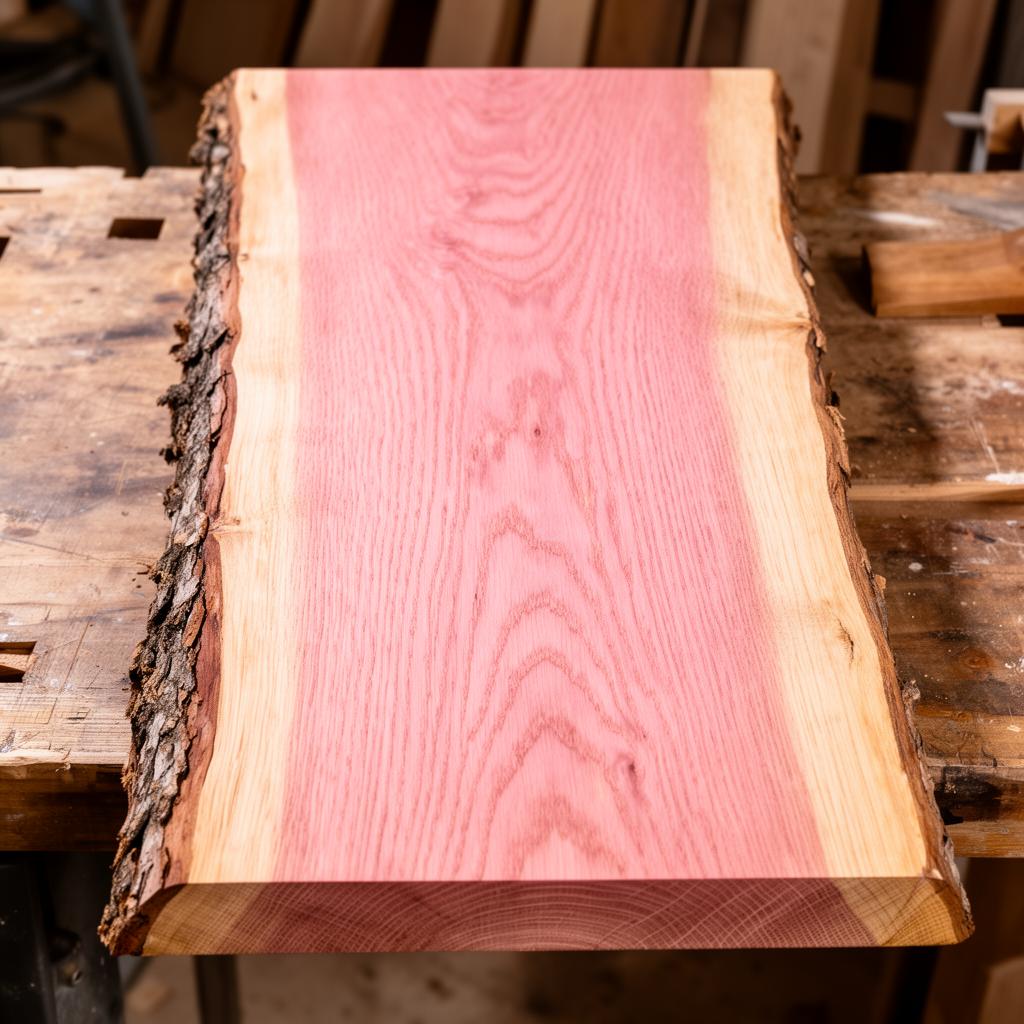
Pinkish to reddish-brown
Grain
Open-pored, very prominent cathedral
Red Oak Cabinets — Cost, Cut, Stain & Durability
Red oak (Quercus rubra) is the most widely harvested hardwood in North America and was the default cabinet wood from the 1970s through the early 2000s. Its grain is bolder and more open than white oak, with a distinct pinkish-red cast in the heartwood and a creamier sapwood. After roughly 15 years of being out of fashion, red oak has returned to favor — partly because it costs 25-30% less than white oak, partly because designers are revisiting honey-toned mid-century kitchens, and partly because supply chain stability has made it the reliable choice for tight project timelines.
Workability is excellent. Red oak machines, glues, and stains predictably, holds screws tightly, and forgives small errors that hickory or hard maple punish. Its open grain accepts pigment stains so deeply that you can shift it to nearly any tone — from limed bone-white to espresso to gray, and everything between. The same open structure means red oak should never be used for wine racks, anything that holds liquid, or surfaces that touch standing water (white oak's closed pores are watertight; red oak's are not).
For modern projects we typically specify rift-cut red oak with a clear hardwax oil. The look is closer to vintage Scandinavian than to 1990s builder-grade kitchens — straight grain, no cathedral arches, warm amber tone. For traditional and farmhouse jobs, plain-sawn red oak with a pigment stain plus optional glaze gives the classic warm look that defined American kitchens for two generations.
Janka hardness of 1,290 lbf puts red oak slightly below white oak (1,360) and well above black walnut (1,010), making it more than tough enough for daily kitchen use. Dimensional stability is moderate — red oak moves more than white oak in NYC's humidity swings, but a quality conversion varnish or hardwax oil topcoat keeps doors flat and joints tight year-round.
Cost in the NYC market currently runs $7-$10 per board foot for plain-sawn red oak — the most affordable premium domestic hardwood available. Rift-cut red oak runs $10-$13/bf, still well below plain-sawn white oak. For a typical 30-linear-foot kitchen, expect red oak cabinetry to cost roughly $4,000-$8,000 less than equivalent white oak construction, with no compromise on durability or finish quality.
Best uses include traditional shaker, mid-century modern slab, painted bases where you want grain texture visible, transitional kitchens on a budget, and any project that needs to ship in 6 weeks instead of 10. We have specified red oak for prewar Brooklyn brownstones, Queens family kitchens, and several flip projects in Brooklyn where the budget mattered more than the trend.
The honest knock on red oak is the pinkish undertone. It clashes with cool color palettes (gray, blue, true white) and reads dated when paired with the wrong stain. Done well — limed white over rift-cut, or a warm honey stain over plain-sawn — red oak looks current and intentional. Done badly with a generic medium stain it can read as a 1995 builder-grade kitchen. Cut and finish matter more for red oak than for any other species on this list.
**Durability in a real NYC kitchen.** At 1,290 lbf Janka, red oak door faces shrug off the dents that soft species pick up from backpacks, pot handles, and dog tails. The open pore structure that hurts it around water actually helps around wear: scratches disappear into the grain instead of reading as bright lines across a flat field, and a damaged edge can be sanded and re-stained in place rather than replaced. Where red oak needs discipline is moisture — we spec a full conversion-varnish envelope (backs, edges, and interior faces) on sink bases and dishwasher returns, and we keep toe kicks in a matched laminate rather than solid oak so mop water never wicks into end grain. Radiator-heated prewar apartments swing from 20% to 55% relative humidity across a year; five-piece doors with floating center panels absorb that movement, while one-piece slab doors in red oak should be veneered over an engineered core rather than glued up solid.
**Finish options we build in.** Clear hardwax oil over rift-cut for a matte Scandinavian read; limed or cerused white where you want the grain to show as texture, not color; honey and amber pigment stains for mid-century warmth; espresso and gray dye stains when the pink undertone needs to be neutralized (dye first, pigment second — pigment alone leaves the pores pinker than the field); and grain-filled paint for clients who want oak texture under a color. Sheen matters as much as color: 10–20% matte hides the open pore, while satin and above make it glint. Every red oak job includes door samples finished from the same batch our supplier will use, so what you approve is what ships.
**Custom red oak cabinetry in NYC.** We design red oak kitchens, islands, vanities, and built-ins to the exact opening — no filler strips, no stock sizes — built by our vetted millwork suppliers, with delivery and install across Brooklyn, Queens, Manhattan, the Bronx, and Staten Island. Typical scope runs $350 per linear foot for kitchen cabinetry, with a 6–8 week lead time that beats white oak by two weeks and rift-cut by up to six.
Close-up of red oak grain — open-pored, very prominent cathedral.
The Honest Tradeoffs
What we love
- Most affordable premium domestic hardwood ($7-$10/bf)
- Takes any stain color predictably
- Strong, hard, and easy to repair
- Abundant supply, stable lead times
- Rift-cut version reads as modern Scandinavian
What to watch for
- Open grain is not watertight — avoid for wet zones
- Pinkish undertone can clash with cool palettes
- Less dimensionally stable than white oak
- Wrong stain choice can read as dated builder-grade
Common Uses
- •Traditional shaker
- •Mid-century modern slab
- •Painted bases with grain texture
- •Budget-conscious renovations
- •Quick-turn projects
Best Finishes
- •Honey stain + matte topcoat
- •Limed white
- •Espresso pigment
- •Cerused gray
- •Clear hardwax oil (rift-cut)
Door Styles That Suit It
- •Shaker
- •Raised panel
- •Slab (rift-cut)
- •Beaded inset
Red Oak Cabinet FAQs — Grain, Stain, Cost & Durability
10 questions
- Is red oak cheaper than white oak?
- Yes — red oak typically runs 25-30% less per board foot than white oak in the NYC market. Plain-sawn red oak is currently $7-$10/bf vs $10-$12 for white oak. For a 30-linear-foot kitchen, that's a $4,000-$8,000 lumber savings with no compromise on durability.
- How much do red oak kitchen cabinets cost in NYC?
- Custom red oak cabinets typically run $12,000-$20,000 for a 30-linear-foot kitchen depending on door style, finish, and hardware. That makes red oak the best value in custom solid-wood cabinetry — significantly less than walnut, white oak, or rift-cut alternatives.
- What is the difference between red oak and white oak?
- Red oak has a pinkish-red heartwood, more open grain, and is not watertight. White oak has a tan-olive heartwood, tighter grain, is harder (1,360 vs 1,290 Janka), more dimensionally stable, and watertight enough to build whiskey barrels. White oak costs 25-30% more and is currently more on-trend for high-end design.
- Does red oak still look dated?
- Only with the wrong cut and finish. Plain-sawn red oak with a generic medium stain reads as 1990s builder-grade. Rift-cut red oak with a clear hardwax oil reads as modern Scandinavian. Limed white or honey stain over plain-sawn reads as intentional mid-century. The species itself is not the problem — execution matters.
- Can red oak be painted?
- Yes, but the open grain telegraphs through paint unless filled with a grain filler first. Many designers leave the texture visible under paint as a feature. If you want a perfectly smooth painted finish, specify maple or birch instead — both paint better than red oak.
- What's the lead time for red oak cabinets?
- Red oak has the most stable supply of any premium hardwood in the NYC market. Expect 6-8 weeks for custom cabinets versus 8-10 weeks for white oak and 10-14 weeks for rift-cut or quartersawn. For tight project timelines, red oak is often the only premium hardwood available without delay.
- Will red oak cabinets fade or change color?
- Red oak ambers gently with UV exposure over 5-10 years, deepening from pinkish-red toward a warmer amber-brown. The change is subtle and generally improves the color, mellowing the pink undertone that can read as cold when new. A UV-protective topcoat slows but does not stop this aging.
- How durable are red oak cabinets in a family kitchen?
- Very. Red oak's 1,290 lbf Janka rating is harder than walnut and cherry, and its open cathedral grain camouflages the scratches that show as bright lines on smooth species like maple. Damaged edges can be sanded and re-stained in place instead of replaced. The one limit is standing water — the pores are not watertight, so we seal sink bases and dishwasher returns on all six sides and keep toe kicks in a matched laminate.
- What finishes work best on red oak cabinets?
- Clear hardwax oil over rift-cut for a matte Scandinavian look; limed or cerused white to read the grain as texture; honey or amber pigment stain for mid-century warmth; a dye-then-pigment sequence for espresso or gray when you need to neutralize the pink undertone; and grain-filled paint if you want oak texture under color. Keep sheen at 10-20% matte — satin and gloss make the open pores glint.
- Do you build custom red oak cabinetry across NYC?
- Yes. Green Cabinets NY designs red oak kitchens, islands, vanities, and built-ins to the exact opening, built by our vetted millwork suppliers, with delivery and installation across Brooklyn, Queens, Manhattan, the Bronx, and Staten Island. Kitchen cabinetry runs about $350 per linear foot with a 6-8 week lead time.
Red Oak Comparisons
Choosing between species or cuts? These head-to-head guides break down grain, cost, durability, and best use.
Red Oak vs White Oak
Pink, open-grain warmth vs neutral, closed-grain modernism — and why white oak resists moisture better.
Read the comparisonRed Oak vs Quartersawn Oak
Affordable cathedral grain vs premium ray-fleck — same family, very different look and price.
Read the comparisonRed Oak vs Walnut
Affordable warm-pink classic vs premium chocolate hardwood — wildly different price tiers, both stain-grade icons.
Read the comparisonRed Oak vs Maple
Open cathedral grain vs tight closed grain — and why painted oak almost never works while painted maple always does.
Read the comparisonRed Oak vs Hickory
Janka 1290 vs 1820 — when you need maximum dent resistance and don't mind the wilder color variation.
Read the comparison
Start a project
Let’s measure your room.
Tell us about the space and we’ll book a free in-home consultation. We bring the samples.
By appointment only in Brooklyn, Manhattan, Queens and Staten Island.