Rift-Cut White Oak
The defining cut of modern luxury kitchens.
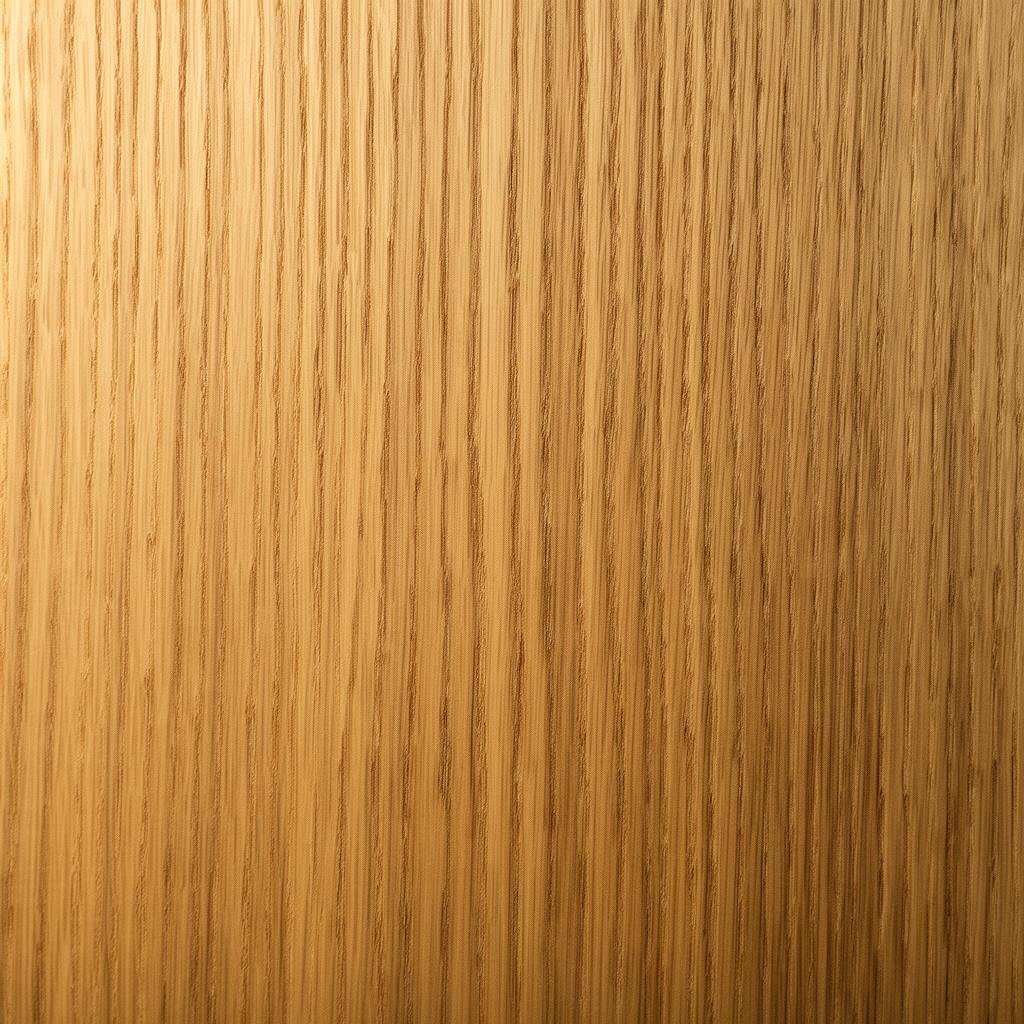
Rift-cut white oak shows tight, ruler-straight vertical grain with no cathedral arches. It's the most consistent door-to-door look in cabinetry and the signature of post-2018 high-end design.
Quercus alba (rift sawn) · Eastern U.S.
Janka Hardness
1,360 lbf
Cost Tier
$$$$
Workability
Good
Stain Take
Excellent
Stability (1–5)
5
Specific Gravity
0.68
Color
Light to medium tan with olive undertones
Grain
Tight, vertical, ruler-straight
About Rift-Cut White Oak
Rift-cut white oak (Quercus alba, rift sawn) is the same species as standard white oak — but the cut transforms its visual character. Rift sawing slices the log at a 30-to-60 degree angle to the growth rings, producing boards with tight, parallel grain lines that run dead straight from end to end. There are no cathedral arches, no wild figure, and almost no ray fleck. The result is the calmest, most modern-looking face grain in commercial cabinetry.
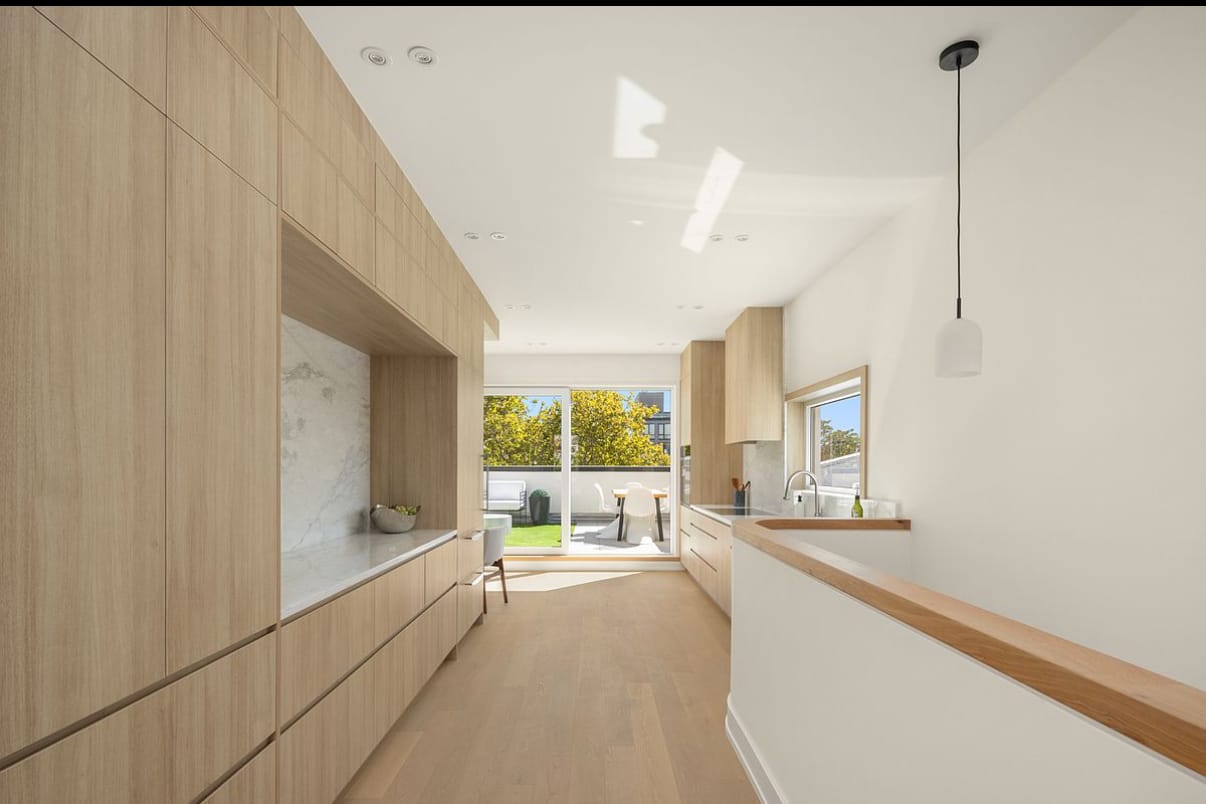
Designers love rift-cut for one specific reason: door-to-door consistency. On a 14-foot wall of slab fronts, plain-sawn lumber gives you visible variation between every door — some show full arches, some show partial figure, some show almost nothing. Rift-cut eliminates that visual noise. Every door reads identical, which is exactly what minimalist and modern kitchens demand. This is why every shelter magazine kitchen since roughly 2018 specifies rift-cut white oak.
The trade-off is yield. A log sawn for rift produces only 25-30% rift-quality boards versus 60-70% plain-sawn yield. That cuts log value sharply, which is why rift-cut white oak runs roughly 30-40% more per board foot than plain-sawn — currently $14-$18/bf in the NYC market versus $10-$12 for plain. For a typical 30-linear-foot kitchen, expect a $2,500-$4,000 lumber premium over plain-sawn white oak.
Rift-cut takes the same finishing palette as standard white oak: hardwax oils for natural warmth, fumed and smoked finishes for cool gray tones, cerused white for textural contrast, and reactive iron-acetate for blackened looks. Pair with brass, blackened steel, or warm nickel hardware. We do not recommend painting rift-cut — paying the rift premium and then covering the grain defeats the purpose.
In Brooklyn and Manhattan brownstones we typically specify rift-cut for slab fronts on contemporary kitchens, and pair with plain-sawn white oak floors below. The two cuts of the same species play together beautifully without matching exactly. For Park Slope and Williamsburg lofts, rift-cut shaker doors with a hardwax oil finish have become the de facto signature look.
Close-up of rift-cut white oak grain — tight, vertical, ruler-straight.
The Honest Tradeoffs
What we love
- Most consistent door-to-door grain match available
- Reads as calm and modern — no cathedral noise
- More dimensionally stable than plain-sawn (cuts perpendicular to rings)
- Same hardness and water resistance as plain white oak
What to watch for
- 30-40% more expensive per board foot than plain-sawn
- Lower yield = longer lead times for custom widths
- Wastes the cut's beauty if you plan to paint it
- Less character than plain-sawn for traditional kitchens
Common Uses
- •Modern slab fronts
- •Minimalist shaker
- •Floor-to-ceiling pantries
- •Custom range hoods
Best Finishes
- •Hardwax oil natural
- •Fumed/smoked
- •Cerused white
- •Rubio Monocoat Pure
Door Styles That Suit It
- •Slab
- •Shaker
- •Reeded
- •Frameless European
Rift-Cut White Oak FAQs — Grain, Slab vs Shaker & Cost
6 questions
- What is the difference between rift-cut and plain-sawn white oak?
- Plain-sawn shows wide cathedral arches and varies dramatically board-to-board. Rift-cut shows tight, parallel vertical lines and reads almost identical from one door to the next. Rift is preferred for modern minimalist kitchens; plain-sawn for traditional or farmhouse looks.
- How much more does rift-cut cost than plain-sawn?
- Roughly 30-40% more per board foot. In the NYC market, plain-sawn white oak runs $10-$12/bf while rift-cut runs $14-$18/bf. On a typical 30-linear-foot kitchen, that's a $2,500-$4,000 lumber premium.
- Can rift-cut white oak be stained dark?
- Yes, but think twice. Rift-cut's value is its calm grain — staining it dark obscures the very thing you paid extra for. Most designers pair rift-cut with hardwax oil natural, fumed, or reactive finishes that preserve grain visibility.
Rift-Cut White Oak Comparisons
Choosing between species or cuts? These head-to-head guides break down grain, cost, durability, and best use.
Start a project
Let’s measure your room.
Tell us about the space and we’ll book a free in-home consultation. We bring the samples.
By appointment only in Brooklyn, Manhattan, Queens and Staten Island.